
Science
How To Teach Science With Experiments: Actionable Guide That Inspires

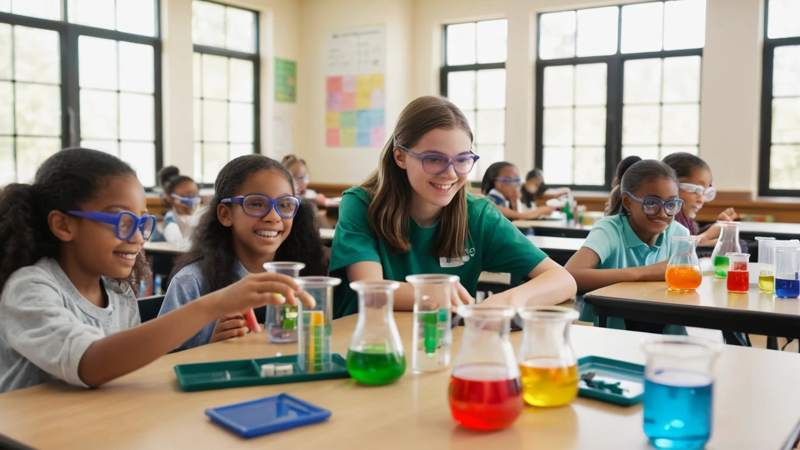
How to teach science with experiments using simple, fun, hands-on strategies that boost learning and curiosity in every classroom.
Teaching science with experiments means using hands-on activities to help students explore concepts, ask questions, and discover answers through real experiences. This approach builds curiosity, strengthens understanding, and turns abstract ideas into memorable lessons that students enjoy.
How To Teach Science With Experiments
Have you ever noticed how kids light up when they get to touch, mix, or test something? That spark isn’t random. It’s curiosity at work—and science thrives on it. 🌟
Teaching science with experiments is one of the most effective ways to help students understand big ideas in simple, concrete ways. When students observe something happening right in front of them, the learning sticks. So let’s break down how you can bring powerful, engaging experiments into your science lessons the smart way.
Why Experiments Make Science Easier To Learn 🔬
Using experiments brings science to life. Students stop memorizing facts and start discovering answers themselves. This shift makes learning feel natural, fun, and meaningful.
Experiments also help students build confidence. They learn that mistakes are normal. They learn to rethink ideas. And they see how real scientists work through problems step-by-step. This builds critical thinking and curiosity. ✨
Hands-on activities also support different learning styles. Some kids learn by watching. Some by doing. Some by talking things out. Experiments bring all these elements together in a single lesson.
Understanding The Core Purpose Of Science Experiments 🧪
Before planning activities, it helps to know what experiments should accomplish. The goal isn’t just to make things fizz or pop. The goal is to help students understand why something happens.
A good experiment teaches students to ask questions. It guides them to test ideas. And it empowers them to connect new knowledge to the real world. That’s how science becomes more than just a subject—it becomes a way of thinking.
Experiments also support long-term retention. When students physically participate, the experience stays with them longer than reading a textbook paragraph.
Start With Simple, Safe, And Budget-Friendly Activities 💡
You don’t need expensive lab equipment to teach science effectively. Common classroom items or household materials often work perfectly. Simple experiments reduce stress for teachers and make learning more accessible.
Start with activities that require a few easy steps. This builds confidence in both teachers and students. Over time, you can introduce more detailed or multi-step experiments.
Safety should always be your first priority. Choose age-appropriate materials and give clear instructions before anything begins.
Planning Experiments That Match Your Learning Goals 🎯
Every experiment should match a clear learning goal. Ask yourself what concept you want students to understand. Then choose an activity that demonstrates that idea in action.
For example:
- Want to teach density? Use water, oil, and food coloring.
- Want to teach friction? Test different surfaces with toy cars.
- Want to teach chemical reactions? Try vinegar and baking soda.
When the experiment and the lesson goal connect, the learning becomes stronger and more memorable.
A Helpful Comparison Of Experiment Types
| Experiment Type | Best For | Example |
| Demonstration Experiments | Large classes or younger students | Teacher-led volcano eruption |
| Guided Inquiry | Middle-level students | Students follow steps but make predictions |
| Open Inquiry | Advanced learners | Students design their own experiment |
| Real-World Application | All grades | Testing water filters or plant growth |
Using Inquiry-Based Learning To Boost Engagement 🔎
Inquiry-based learning invites students to take the lead. Instead of giving them the answer, you help them discover it.
This approach encourages deeper thinking. Students ask more questions. They explore different pathways. And they learn to test ideas on their own. This builds independence and confidence.
Inquiry also supports creativity. Kids feel free to try new approaches, compare results, and explain their findings in their own words. This makes the classroom a more active and exciting place.
Setting Up A Classroom Environment For Hands-On Learning 🧰
A successful science classroom is organized, safe, and flexible. Clear routines help students stay focused, even when the activity gets exciting.
Try these tips:
- Create stations with all needed materials.
- Label supplies so students can find what they need quickly.
- Offer trays or mats to keep messes contained.
- Give simple cleanup roles to students.
A well-set environment helps students take experiments seriously while still having fun.
Building Curiosity With Predict-And-Test Activities 🤔
One of the best ways to make experiments memorable is to ask students to predict what will happen. Kids love guessing outcomes. It activates prior knowledge and gets their minds ready.
After they predict, you guide them through the test. Then they compare their results with their predictions. This helps students recognize patterns and understand cause-and-effect.
Try adding follow-up questions like:
- “Why do you think that happened?”
- “What would change if we used different materials?”
These conversations deepen learning.
Balancing Fun And Learning In Every Experiment 🎉📘
Experiments should be exciting, but they should also teach something useful. It’s important to find the right balance between fun and learning.
Start with a simple wow-factor moment. Then connect that moment to the science concept. Kids enjoy the hands-on part, and they remember the explanation because it relates to a real experience.
A great experiment entertains, educates, and inspires all at the same time.
Sample Experiment Ideas For Different Grade Levels 📚
Use these ideas to match experiments to student ages:
- Grades K–2:
- Make rain clouds using shaving cream and colored water.
- Test magnet strength with paper clips.
- Grades 3–5:
- Build simple circuits with batteries and bulbs.
- Test plant growth with different light sources.
- Middle School:
- Explore chemical changes using steel wool and vinegar.
- Test pH levels with homemade indicators.
- High School:
- Build simple machines to study mechanical advantage.
- Experiment with reaction rates using temperature differences.
Each experiment teaches foundational science principles in age-appropriate ways.
Keeping Students Safe During Experiments 🛡️
Safety must always come first. Clear rules help everyone stay confident and focused. Before every experiment, review expectations and procedures.
Common safety steps include:
- Wear goggles when needed.
- Keep materials away from the face.
- Avoid tasting or touching unknown substances.
- Follow instructions step-by-step.
When students feel safe, they participate more freely and responsibly.
A Simple Guide For Structuring Any Science Experiment
| Step | What Students Do | Why It Matters |
| Question | Identify what they want to explore | Drives curiosity |
| Hypothesis | Make a prediction | Builds logical thinking |
| Procedure | Follow steps to test the idea | Ensures consistency |
| Observation | Record what they see | Strengthens focus |
| Conclusion | Explain results | Deepens understanding |
Helping Students Record Their Results With Simple Tools 📒
Students learn more when they write or draw their observations. Recording results helps them process information in meaningful ways.
You can use:
- Science journals
- Digital notebooks
- Charts or graphs
- Drawings of observations
Encourage students to review their notes at the end. This helps them notice patterns and make stronger connections.
Using Real-Life Examples To Make Experiments More Meaningful 🌎
Kids love learning about things they see every day. Real-life examples help bridge the gap between classroom science and the real world.
Try connecting lessons to:
- Weather changes
- Cooking reactions
- Sports motion
- Garden growth
When students see science happening around them, they understand it more clearly and become more curious.
Encouraging Collaboration And Team Experiments 🤝
Working in small groups teaches students how to share responsibility and communicate ideas. Collaboration helps kids build social skills and scientific reasoning at the same time.
Group experiments also lead to richer discussions. Students compare findings, debate ideas, and help each other solve problems. This teamwork creates a positive, supportive learning environment.
Allow each student to take a different role, such as:
- Recorder
- Materials manager
- Timekeeper
- Presenter
This makes everyone feel included.
Assessing Learning Through Observations And Reflections 📝
Assessment doesn’t always need to be a test. Observing students during experiments reveals a lot about their understanding. You can watch how they predict, observe, and explain results.
After the experiment, ask students to reflect. A short paragraph or quick discussion helps you understand what they learned. Reflection also reinforces concepts and improves retention.
Consider using simple rubrics focused on:
- Participation
- Accuracy
- Curiosity
- Understanding
How To Turn Experiments Into Long-Term Projects 🌱
Long-term science projects can create deeper learning experiences. Students observe changes over time and analyze long-term patterns.
Examples include:
- Plant growth journals
- Weather tracking charts
- Solar oven cooking
- Recycling or compost experiments
These projects make science part of daily life. Kids learn patience, consistency, and the importance of long-term observation.
Motivating Students With Real Scientist Thinking 🧠✨
Scientists don’t always know the answer. They test, revise, and try again. When students adopt this mindset, they grow into strong problem-solvers.
Celebrate mistakes as part of learning. Encourage questions that challenge ideas. And let students explore different explanations. This scientific mindset builds confidence and independence.
When kids start thinking like scientists, they see the world with fresh curiosity.
Conclusion
Teaching science through experiments transforms the way students learn. It makes science fun, engaging, and unforgettable. Hands-on activities build curiosity, boost understanding, and help kids think like real scientists. When students predict, test, and explore, they discover that learning isn’t just about answers—it’s about the excitement of finding them.
FAQs
How can I start teaching science with simple experiments?
Begin with easy, low-cost materials and choose activities that match your goals. Keep instructions clear and safe. Use predictions and observations to guide learning.
What experiments work best for young kids?
Simple activities with color, motion, or magnets work well. Young students learn best through sensory experiences. Keep steps short and engaging.
How do I keep experiments safe in the classroom?
Review rules before starting. Use age-appropriate materials and model safe behavior. Supervise closely to ensure everyone follows procedures.
How do experiments make science more meaningful?
Experiments turn ideas into real experiences. Students witness cause-and-effect directly. This makes concepts easier to understand and remember.
How can I assess learning from experiments?
Use journals, reflections, and simple rubrics. Watch how students predict, test, and explain results. Assessment helps reinforce understanding.

How To Prepare For A Job Interview: Expert Tips That Inspire Confidence

How To Teach Science With Experiments: Actionable Guide That Inspires

How To Make Math Fun: Powerful Ways Kids Love Learning

Benefits Of Gamification In Online Education – Powerful & Uplifting

Best Educational Podcasts For Students – Inspiring Learning Made Fun

How To Write A Strong College Essay: Proven Tips For Success
Best Educational Podcasts For Students – Inspiring Learning Made Fun
Benefits Of Gamification In Online Education – Powerful & Uplifting
How To Make Math Fun: Powerful Ways Kids Love Learning
How To Teach Science With Experiments: Actionable Guide That Inspires
-
 College University4 weeks ago
How To Write A Strong College Essay: Proven Tips For Success
-
 K 123 weeks ago
Best Educational Podcasts For Students – Inspiring Learning Made Fun
-
 Online Education2 weeks ago
Benefits Of Gamification In Online Education – Powerful & Uplifting
-
 Mathematics1 week ago
How To Make Math Fun: Powerful Ways Kids Love Learning